
A practical vocabulary guide for buyers and technical teams working with submerged arc furnace electrode systems.
Direct Answer
Electrode paste and Soderberg paste usually describe the carbonaceous feed material charged into a self-baking electrode system. A Soderberg electrode is the working electrode that develops from that paste inside a steel casing during furnace operation. The terms are related, but they do not identify the same physical state or the same point in the operating process.
Key Takeaways
- Electrode paste is a supplied material; the working self-baking electrode is formed in service.
- Soderberg paste is a market term, but specifications still need application, test-method and furnace context.
- A carbon paste, a baked carbon body and a pre-baked graphite electrode should not be treated as interchangeable products.
- Clear terminology prevents errors in inquiries, test reports and technical troubleshooting.
Table of Contents
- The four terms buyers most often confuse
- Material name versus electrode-system name
- Why terminology affects specifications
- How to write a clear inquiry
- What to confirm before using a supplier term
The Four Terms Buyers Most Often Confuse
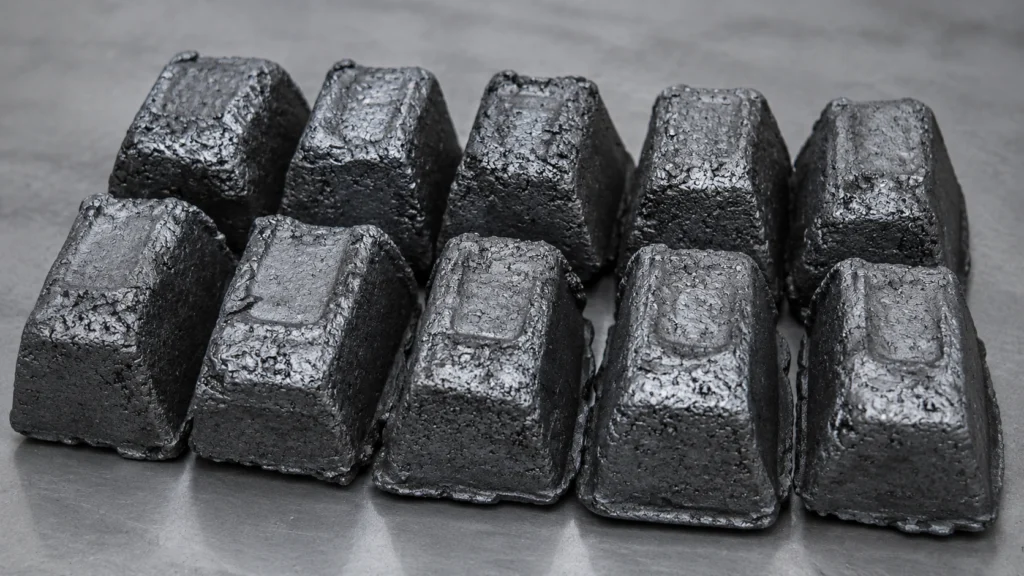
In commercial discussions, electrode paste and Soderberg paste are often used for the same type of feed material. The material normally contains a carbon aggregate system and a carbonaceous binder. It is supplied in a form that can be handled, stored and added to an electrode casing. The supplied form is not yet the finished working electrode.
A self-baking electrode system is the furnace equipment and operating arrangement that receives the paste, transfers current, manages the electrode column and advances it as the working end is consumed. A Soderberg electrode is the carbon electrode body produced within that system. Peer-reviewed descriptions of a real furnace electrode show the casing, contact shoes, paste column and progressively transformed electrode as parts of one operating assembly (real-world electrode study).
| Term | What it identifies | What it does not define |
| Electrode paste | The carbonaceous feed material supplied for a self-baking electrode system | A finished electrode or a universal furnace setting |
| Soderberg paste | A common commercial name for electrode paste used in a Soderberg system | A complete specification without test and application details |
| Self-baking electrode system | The casing, current-transfer, column-management and slipping arrangement | The paste grade by itself |
| Soderberg electrode | The working electrode body formed and consumed during operation | A pre-baked graphite electrode rod |
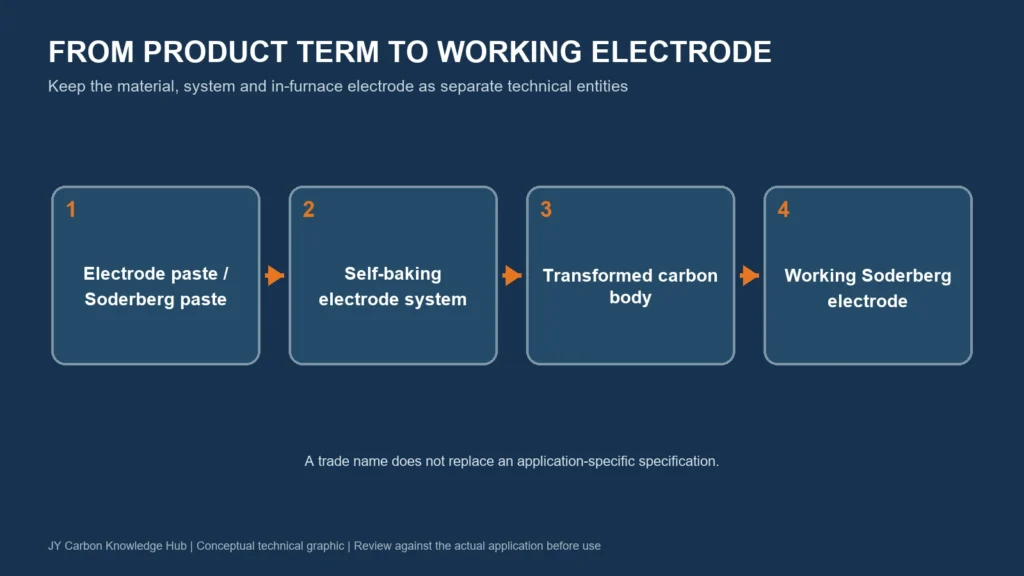
Terminology map: the supplied paste becomes a working electrode only through the furnace electrode system and its operating conditions.
Material Name Versus Electrode-System Name
The distinction between material and system matters because no paste property works independently of the equipment and operating environment. The paste must soften, fill the casing cross-section and transform into a coherent carbon body as it moves through the electrode column. Current transfer, heat flow, addition practice and slipping determine the conditions under which that transformation occurs.
Thermal-property research describes the paste as a material that changes substantially during heating and carbonization (thermal properties of Soderberg electrode materials). That does not make a published laboratory condition a furnace instruction. It shows why the same word paste can refer to material whose behavior changes with temperature, residence and test method.
Why Terminology Affects Specifications
An inquiry that asks only for “Soderberg electrode” leaves several decisions open. The supplier still needs to know whether the customer wants paste, a particular supplied form, inspection documents, packaging requirements or technical support for an existing electrode system. The furnace application and the material being smelted also influence which questions matter.
Test-report language needs the same discipline. Ash, volatile matter, fixed carbon, resistivity and other indicators refer to a defined sample and method. They do not describe the complete in-furnace electrode unless the sampling condition, transformation state and application are clear. A buyer should therefore connect every reported property to the material state being tested.
How to Write a Clear Inquiry
A useful inquiry begins with the system and then identifies the material request. For example: state that the furnace uses a self-baking electrode, name the smelting application, describe the paste form currently handled, and list the agreed inspection items. If the inquiry follows an operating concern, describe the symptom without declaring a cause before evidence is reviewed.
- Name the furnace application and smelted product.
- State that the request concerns electrode paste for a self-baking system.
- Describe the supplied form and packaging used by the site.
- List the test methods or customer targets that must appear on the inspection record.
- Separate a material-purchase question from an operating-troubleshooting question.
What to Confirm Before Using a Supplier Term
Terminology varies across markets, so the safest approach is to define the product in the inquiry rather than rely on a label. Review the JY Carbon electrode paste page for product-level information and the electrode paste and graphite electrode pillar guide for the broader difference between self-baking and pre-baked electrode systems.
Before approving a specification, confirm the product form, sample condition, test method, acceptance target, packaging, furnace application and document requirements. That short confirmation prevents a familiar term from becoming an incorrect technical assumption.
Sources
- Characterisation of a Real-World Søderberg Electrode. Metals, 2021. https://www.mdpi.com/2075-4701/11/1/5
- Thermal Properties of Söderberg Electrode Materials. Metallurgical and Materials Transactions B, 2020. https://link.springer.com/article/10.1007/s11663-020-01890-0
Written by Sterling Yang,Senior Vice President, Jincheng Jiyang Carbon Co.,Ltd.
Technically reviewed by Mr.Yang,Technical Director.


