Technical & Engineering Solutions

We don’t just supply carbon. We engineer your smelting efficiency. Partner with our 40-year expert team to reduce consumption, eliminate breakages, and maximize your furnace ROI.

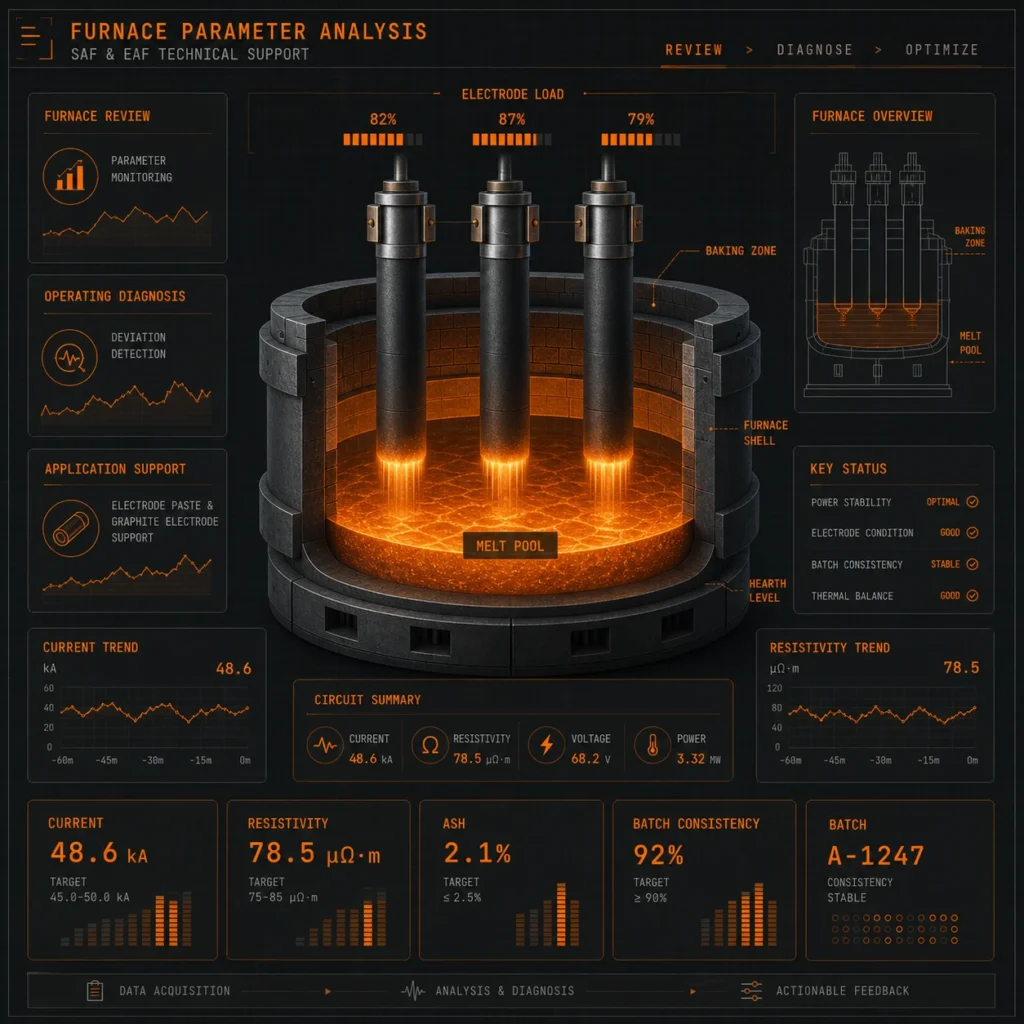
The T.E.S. Service Matrix

A structured, three-phase engineering engagement — from furnace matching to continuous optimization.

Step 01

Furnace Matching & Formulation

We calculate the optimal physical and chemical parameters based on your transformer KVA, casing diameter, and slag/slagless process to ensure perfect compatibility.

KVA

Transformer capacity — primary input for formulation calculation

Step 02

Troubleshooting & Diagnostics

Rapid response to operational anomalies. We diagnose and solve critical issues like electrode paste soft/hard breakages in SAFs, and abnormal oxidation in EAFs.

48h

Written diagnostic report delivered — no site visit required

Step 03

Continuous Cost Optimization

By tracking in-furnace performance data, we iteratively refine the raw material blend and density for your next batch, driving down your power consumption per ton of alloy.

kWh/t

Power consumption per ton — the single KPI we optimize against

Avg. −8 to −12% reduction across 40+ optimization engagements (2020–2025)

Specialized Furnace Support

Dedicated engineering protocols for each furnace type — maximizing electrode performance in your specific process.

Soderberg Paste — SAF

Submerged Arc Furnaces (SAF)

SAF-specific paste formulations require precise baking zone control and mechanical stability management.

— Formulation density is matched to live furnace load conditions, eliminating paste-side fragmentation under peak KVA cycles.

— Electrode descent rate is calibrated to your specific transformer KVA and casing diameter, optimising paste consumption and baking zone position.

— Thermal gradient monitoring ensures a complete, controlled carbonisation curve — preventing both premature and under-baked zones.

Graphite Electrodes — EAF

Electric Arc Furnaces (EAF)

Graphite electrode performance in EAF requires control of tip sublimation, side oxidation, and joint integrity.

— Arc management and power factor tuning reduce current density at the tip, directly cutting electrode consumption per heat cycle.

— Atmosphere exposure management and controlled cooling rates extend lateral electrode service life beyond standard industry benchmarks.

— Threaded joint testing ensures leak-proof connections, preventing arcing at joints — the leading cause of accelerated side oxidation in EAF operations.

Common Failure Root Causes

Field-validated diagnostics from 40 years of furnace engagements. Select the symptom closest to what you are observing.

SAF — Electrode Paste

Paste Electrode Issues

Primary Causes
Excessive slipping speed — paste column descends faster than baking zone can carbonise
Ash content above specification — impurities create fracture planes under mechanical stress
Casing diameter mismatch — electrode cross-section too large for current density, creating thermal stress gradients
Recommended Checks
Verify paste descent rate vs. actual baking zone length (should be ≤ 1.2m per 8h shift at rated KVA)
Review last 3 batch COA reports for ash and compressive strength — request from supplier if not provided
Measure actual casing inner diameter and cross-check against transformer KVA rating
Primary Causes
Baking zone too short — incomplete carbonisation leaves a liquid-phase core that shears under its own weight
Binder content too high — excessive pitch content lowers softening point, extending liquid zone
Cooling water flow too aggressive — rapid surface hardening with soft interior creates delamination risk
Recommended Checks
Measure baking zone bottom temperature (target: 350–400°C at solidification front)
Request volatile matter specification from current paste supplier and compare to baking zone conditions
Review cooling water temperature delta between inlet and outlet
Primary Causes
Resistivity too high — poor conductivity forces higher current for same output, accelerating end-tip oxidation
Electrode diameter undersized — higher current density per cm² increases end-tip erosion rate
Furnace operated above rated KVA — electrode is being consumed faster than formulation was designed for
Recommended Checks
Calculate current density (A/cm²) and compare against paste grade specification ceiling
Track kg paste consumed per ton of alloy over last 10 heats — look for step-change vs. gradual drift
EAF — Graphite Electrode

Graphite Electrode Issues

Rapid Tip Consumption / Short Service Life
Primary Causes
Current density exceeding electrode grade ceiling — tip sublimation accelerates exponentially above the rated A/cm² limit
Ultra-high power (UHP) operating conditions with standard power (SP) or high power (HP) grade electrodes
Arc length instability — erratic arcing causes uneven tip erosion and hot-spot sublimation
Recommended Checks
Confirm electrode grade matches actual operating current density — UHP grade required above 25–28 A/cm²
Review power-on time vs. electrode consumption (kg per tonne liquid steel)
Check arc voltage stability logs — arc length fluctuation >15% indicates power control issue, not electrode quality
Primary Causes
Electrode surface temperature above 550°C in ambient atmosphere — oxidation rate increases sharply above this threshold
Insufficient anti-oxidation coating coverage — pinholes in coating allow localised atmospheric attack
Water leaks near electrode — steam at operating temperature converts surface carbon to CO, causing accelerated erosion
Recommended Checks
Inspect electrode surface temperature at collar level using IR gun during operation (target <500°C)
Inspect anti-oxidation coating under magnification before installation — any white-chalking or delamination is a reject signal
Check furnace roof seal integrity around electrode holes — air infiltration is the most common overlooked factor
Primary Causes
Improper torque during nipple make-up — both under- and over-tightening cause joint failure under thermal cycling
Thread damage from previous use or mishandling — visual inspection with thread gauge required before every connection
CTE mismatch between nipple and electrode body — can occur with mixed-supplier configurations
Recommended Checks
Verify torque wrench calibration and make-up torque specification for the specific electrode diameter
Inspect thread engagement length — minimum 85% thread contact required
Confirm nipple and electrode body are from the same manufacturing lot and CTE specification

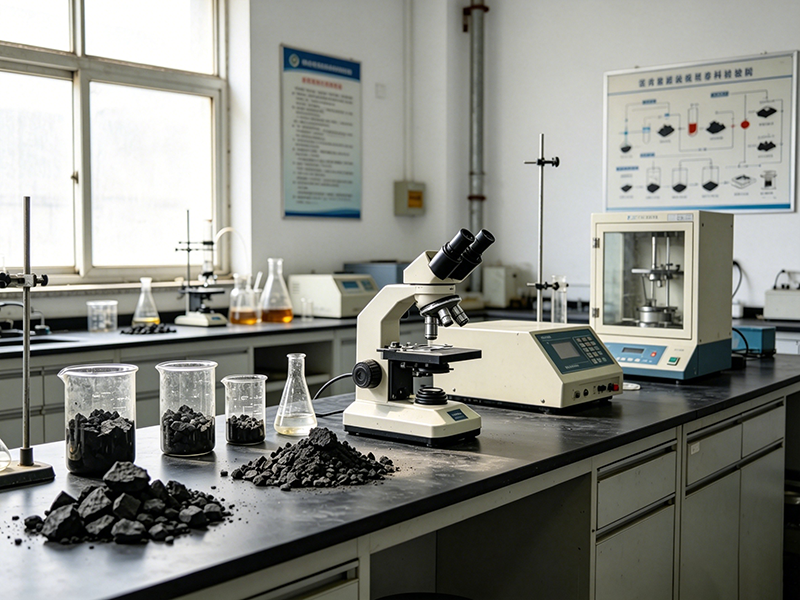
Our R&D Laboratory

ISO 9001 certified. Every batch tested. Full traceability from raw material to your furnace.

ISO

9001:2015 Certified

15

Proprietary Patents

100%

Batch Traceability

Resistivity Testing

Four-probe method. ≤ 60 μΩ·m guaranteed per batch. Full conductivity verification.

Ash Content Analysis

Thermal gravimetric analysis. ≤ 3.0% across all premium grades. Ultra-pure carbon matrix.

Compressive Strength

Universal testing machine. ≥ 18 MPa. Mechanical integrity under extreme furnace load.

Thermal Shock Resistance

Rapid thermal cycling simulation. Validates electrode stability under SAF/EAF operating conditions.

Outcomes From Active Engagements

Anonymous operational results from plants currently under T.E.S. support. Details withheld by client agreement.

Request a Free Technical Audit

Tell us about your current furnace setup or the operational issues you are facing. Our engineers will provide a preliminary diagnostic report.

What to Expect From the Audit

Our T.E.S. team reviews your furnace parameters, current consumption data, and operational pain points to deliver actionable recommendations — before any new material commitment is made.

— KVA rating, casing diameter, current paste/electrode specifications.

— Power consumption per ton, paste consumption rate, electrode wear rate.
— Pinpoint the exact cause of breakages, high consumption, or quality inconsistencies.
— Specific grade, density, and parameter adjustments for your next order.
— Written assessment within48 hoursof form submission.

2026 Carbon Solutions Catalog

42 pages of technical specifications, multi-grade comparison tables, application guidelines, and batch testing methods — all in one comprehensive PDF.

For Immediate Assistance, Please Contact us Now!