

Summary of Findings
Söderberg electrode breakage rarely occurs at random. Hard breakage — brittle fracture within the fully baked section — points first to over-baking, usually compounded by irregular slipping. Soft breakage — plastic deformation or dislocation within the soft-paste zone or the paste-to-baked transition — points first to volatile matter above the YB/T 5215—2015 range of 9.5%–13.5% for standard paste, usually compounded by insufficient baking current density.
Distinguishing between the two, and assigning responsibility between paste supplier and furnace operation, relies on three field-observable signals: the fracture surface, the zone in which fracture occurred, and the sound and light accompanying the event. The sections below provide a diagnostic path that can be applied at the furnace-side without further reference.
Key Findings
- Hard breakage triad: dry, brittle fracture surface with no paste extrusion; fracture within the baked-completion zone; audible crack and visible flare-up at the moment of fracture.
- Soft breakage triad: fracture surface with unbaked paste exposed or extruded (glossy, tacky); fracture in the soft-paste zone or the transition; column often shows barreling deformation or a progressive current decline.
- Hard breakage — root causes in order of diagnostic priority: over-baking, then irregular slipping (sustained fast slipping, or extended non-slipping followed by a large correction), then volatile matter below the YB/T 5215—2015 lower bound of 9.5%.
- Soft breakage — root causes in order of diagnostic priority: volatile matter above 13.5% (standard paste) or 15.5% (closed-top paste), then insufficient baking current density, then excessive soft-paste column height or a softening point below contract specification.
- Four items of field evidence to collect within 24 hours of a breakage event: fracture position relative to the contact shoe, fracture-surface photographs, the current and voltage trace for the preceding shifts, and the Certificate of Analysis (COA) for the paste batch in service.
Contents
- How can hard and soft breakage be distinguished at the furnace-side?
- What causes hard breakage?
- What causes soft breakage?
- What evidence must be collected after a breakage event?
- How is responsibility assigned between paste supplier and furnace operation?
- Frequently asked questions
- Related reading
1. How Can Hard and Soft Breakage Be Distinguished at the Furnace-Side?
Three diagnostic dimensions — fracture surface, fracture zone, and accompanying sound and light — are sufficient for initial classification. Where any two of the three align with one type, that classification can serve as the working hypothesis for root-cause analysis.
| Dimension | Hard breakage | Soft breakage |
| Fracture surface | Dry, bright, brittle; columnar or stepped crack pattern; no paste extrusion | Tacky, glossy, oily in appearance; unbaked soft paste exposed or extruded |
| Fracture zone | Within the baked-completion zone below the contact shoe | In the soft-paste zone above it, or at the paste-to-baked transition |
| Accompanying signals | Sharp crack, frequent flare-up, instantaneous current interruption | Progressive current decline, column barreling, muffled or absent sound |
| Immediate production impact | Sudden stoppage; the fracture face requires prompt handling | Loss of column control; risk of paste contamination of the charge |
Table 1. Fracture surface, fracture zone, and accompanying signals classify a breakage event before any laboratory work begins; two matching dimensions are sufficient to set the working hypothesis.
Establishing the zone boundaries for a specific furnace
The height of the baked-completion zone is not a universal figure. It shifts with electrode diameter, current regime, furnace type, and the site’s slipping cadence, so a value taken from another plant will misclassify events. Each site should calibrate its own boundaries as follows:
- Record the vertical distance from the lower edge of the contact shoe to the fracture point for every breakage event, together with the electrode diameter and the operating current at the time.
- Correlate these records with the fracture-surface condition — dry and brittle against tacky and unbaked — over successive events.
- After a series of events, the transition between the two surface conditions defines the practical zone boundary for that furnace under that operating regime.
Until this calibration exists, the fracture-surface condition takes precedence over position in classifying an event.
Figure 1. Hard breakage occurs in the baked-completion zone below the contact shoe; soft breakage occurs in the transition zone above it — and the boundary between the two is a furnace-specific value, not a published figure. Schematic; not to scale.
When the three dimensions produce mixed signals — for example, a hard-appearing fracture surface located in the soft-paste zone — the event should be handled as soft breakage for immediate response, and the fracture face preserved intact for later analysis. Mixed signals typically indicate simultaneous deviation in paste specification and operating rhythm, and require cross-analysis of the COA against the current trace.
2. What Causes Hard Breakage?
The underlying mechanism is embrittlement of the carbon structure within the baked-completion zone, reducing its capacity to withstand normal thermal and mechanical loading. The causes below are ordered by diagnostic priority — the sequence in which they should be checked, and the sequence in which they are most often confirmed.
2.1 Over-baking
Mechanism. Extended residence within the baking band, or an excessively narrow temperature profile, overbakes the paste: volatile matter is fully evacuated and the binder phase carbonises beyond the intended degree. The resulting material shows elevated brittleness.
Diagnostic indicators.
- Review the slipping record for the preceding week and compare the average slipping rate against the design value for the electrode diameter and load. A sustained shortfall indicates residence beyond the intended baking window.
- The fracture surface appears greyish-white or ceramic-like, rather than the expected dark grey with a faint sheen.
- Off-gas temperature runs persistently below its normal band at comparable load, consistent with little volatile matter remaining to evolve.
2.2 Irregular slipping
Mechanism. Either sustained fast slipping — advancing insufficiently baked material into the high-current zone — or extended non-slipping followed by a single large correction. Both produce localised thermal stress and brittle fracture.
Diagnostic indicators.
- Review the slipping log for the shifts preceding the event, with attention to sustained fast-slip periods and to single large corrections following extended pauses.
- Column length persistently below the design value over the observation window indicates chronic under-slipping.
- Reconcile against the shift log for equipment-related slipping interruptions at the clamp or holder.
2.3 Volatile matter below the standard lower bound
Mechanism. An insufficient binder phase in the paste as supplied yields a loose carbon structure after baking, with reduced mechanical strength.
Diagnostic indicators.
- Review the batch COA against the YB/T 5215—2015 standard-paste lower bound of 9.5%.
- Where the COA value sits close to that lower bound, verify sampling practice before assigning cause to the paste. Sampling non-conformance can shift reported values away from the batch as delivered (see How Sampling and Sample Preparation Affect Electrode Paste Test Results).
2.4 Other factors
Mechanical impact from charge collapse or loading disturbance; holder misalignment producing eccentric operation; and, infrequently, a raw-material batch anomaly. These are established by exclusion of the first three causes rather than by direct indicators.
3. What Causes Soft Breakage?
The underlying mechanism is loading of the soft-paste or transition zone before baking is complete, producing plastic deformation or dislocation. Soft breakage carries a higher secondary risk than hard breakage: paste extruded into the charge can contaminate an entire heat.
3.1 Volatile matter above the standard upper bound
Mechanism. Volatile matter above 13.5% for standard paste, or 15.5% for closed-top paste, leaves devolatilisation incomplete during baking. A partially baked layer persists at the transition zone and cannot sustain column self-weight together with electromagnetic loading.
Diagnostic indicators.
- COA volatile matter above 13.5% (standard paste) or 15.5% (closed-top paste) is out of specification under YB/T 5215—2015.
- The fracture surface exposes a substantial area of soft paste, distinctly soft to the touch.
- Off-gas tar content may run elevated, consistent with delayed volatile evolution.
3.2 Insufficient baking current density
Mechanism. Operating current sustained below design reduces resistive heating within the electrode. Baking-band temperature falls, the baking rate no longer matches the slipping rate, and the transition zone remains under-baked.
Diagnostic indicators.
- Compare the actual current density against the design value for the electrode diameter in use. A sustained shortfall — not a single transient — indicates a baking-rate deficit.
- Common triggering conditions: reduced-load operation following a furnace disturbance, and a slow load ramp during initial energisation.
- Responsibility for this cause lies with operation or furnace condition, not with the paste supplier.
3.3 Excessive soft-paste column or softening point below specification
Mechanism. Column height beyond the design range increases soft-paste self-weight; a softening point below the contract value increases soft-paste flow. Either produces local accumulation at the transition zone that baking cannot resolve in time.
Diagnostic indicators.
- Assess soft-paste column height against the site’s operating standard.
- Compare the COA softening point against the contract specification. The contract value is set for the furnace type and operating cadence, and no single figure applies across furnace types.
- Review the charging log for over-charging driven by shift-progress pressure.
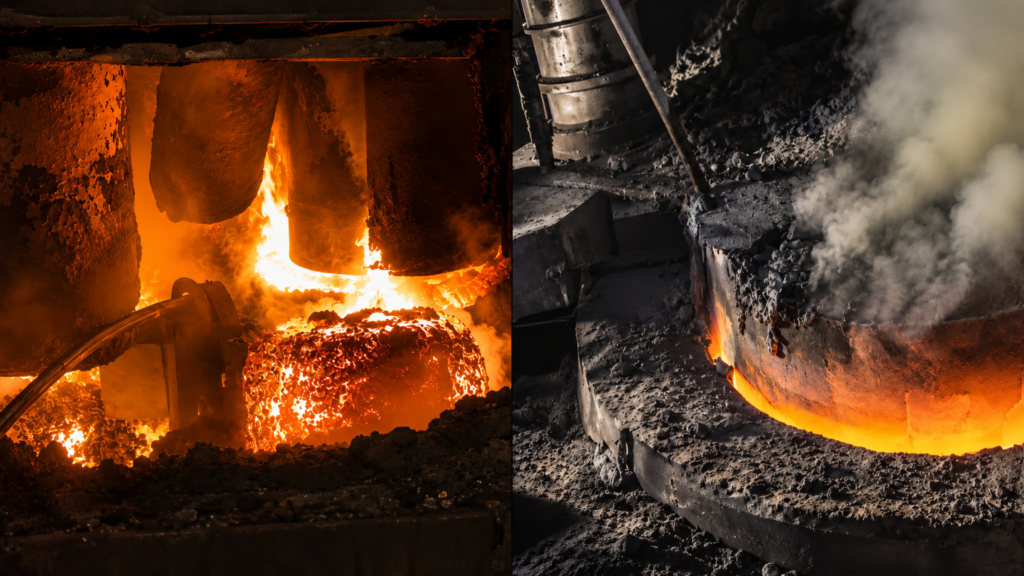
Figure 2. A hard-breakage face is dry, bright and free of extruded paste; a soft-breakage face is tacky and exposes unbaked paste. Where the two are photographed under comparable lighting, classification can be settled at the furnace-side within minutes.
4. What Evidence Must Be Collected After a Breakage Event?
Four items of evidence should be captured within 24 hours. Inconclusive case reviews fail on evidence collection far more often than on analysis.
| Evidence | Method | Purpose |
| Fracture position | Measure the vertical distance from the fracture point to the lower edge of the contact shoe, to the nearest millimetre; record the electrode diameter and the operating current at the time | Locates the fracture against the furnace’s own zone calibration |
| Fracture-surface photographs | Mobile phone images capturing paste condition — dry against tacky, presence of extrusion; front and side views | Primary evidence for hard/soft classification |
| Current and voltage trace | Export from the DCS or furnace-side recorder as CSV or screenshot, covering the shifts preceding the event | Establishes whether current density was adequate and whether abnormal transients preceded fracture |
| Paste batch COA | Request from the supplier; where a retained sample exists, submit it for re-test | Verifies volatile matter, ash, and softening point against specification |
Table 2. The four items above are collected at the furnace-side within one shift; each subsequent step of the diagnosis depends on evidence that cannot be reconstructed later.
Where practical, take a representative sample from the fracture face — following the sampling practice specified for the paste — and submit it for ash and volatile matter re-testing. COA values and the condition of the batch as received can diverge, particularly where storage or ocean-freight conditions have been unfavourable (see Electrode Paste Packaging and Storage for Export Orders).
5. How Is Responsibility Assigned Between Paste Supplier and Furnace Operation?
The matrix below supports responsibility assessment in a supplier-customer discussion. Most events reflect a combination — paste specification near the boundary of range together with an operating pattern that amplifies the resulting sensitivity — and single-source attribution is rarely productive.
Figure 3. The diagnostic path runs from evidence collection through classification to root cause, and only then to attribution; the cause sequence within each branch is a checking order, not a frequency distribution. Schematic; not to scale.
| Observed combination | Most likely responsibility | Notes |
| COA volatile matter out of range, fracture signals consistent | Paste supplier | Contract remedies apply; third-party re-testing of the fracture sample is recommended in parallel |
| COA within range, material anomaly in the current or slipping trace | Furnace operation | Not a supplier issue; investigate slipping cadence and power regime |
| COA close to a range boundary, with an operating deviation also present | Joint review | Joint case review by customer and supplier; the evidence does not support single-source attribution |
| COA within range but sampling non-conformant | Re-sample and re-test | A COA reflects the sampling point only; sampling practice must be verified before further attribution |
| Breakage on first use of a new batch | Controlled trial required | See How to Plan a Controlled Electrode Paste Trial When Changing Suppliers; single-event data is insufficient |
Table 3. Responsibility follows the combination of COA position and operating evidence, not either one alone — which is why the COA and the current trace are collected together.
6. Frequently Asked Questions
Q1. What is the first step immediately after a breakage event? Isolate power to the affected phase to secure the work area, then photograph the fracture face and record the fracture position. This must happen before the fracture face is disturbed during clearing. Once disturbed, the primary evidence for classification is unrecoverable and the review will typically end without a conclusion.
Q2. The COA reports volatile matter within the specified range. Why did soft breakage still occur? A COA value within range does not exclude soft breakage. Three factors should be checked. First, sampling conformance: a COA reflects only the sampling point (see How Sampling and Sample Preparation Affect Electrode Paste Test Results). Second, baking current density: paste within specification does not compensate for a sustained thermal deficit in the baking band. Third, softening point: volatile matter within range does not imply full specification compliance, and the softening point should be reviewed in parallel.
Q3. Repeated hard breakage after a paste batch change — a supplier issue, or operating cadence? Begin by comparing the COAs of the previous and new batches on volatile matter, ash, and softening point. Where the new batch shows materially lower volatile matter while remaining within the standard range, the previously calibrated slipping cadence becomes conservative: at the same slipping rate, effective baking time increases and over-baking risk rises. This is a parameter shift calling for a cadence adjustment, not a paste-quality issue. A controlled changeover is recommended (see How to Plan a Controlled Electrode Paste Trial When Changing Suppliers).
Q4. Hard breakage and elevated consumption occurring together — one investigation or two? Frequently one. Over-baking produces both, since over-baked carbon oxidises at a higher rate; volatile matter below range produces the same coupling. The two symptoms should not be diagnosed in isolation. Where they occur together, follow the hard-breakage diagnostic path first, then cross-verify against the consumption framework in Excessive Electrode Paste Consumption in a Submerged Arc Furnace.
Q5. When is furnace shutdown required, and when can operation continue? One case admits no discretion: where soft breakage has produced, or is about to produce, paste extrusion into the charge, shut down immediately. Contamination of the heat carries losses well in excess of a short unplanned shutdown. Hard breakage with the fracture in the welded section, and no effect on the remaining two phases, can be managed to the end of shift with appropriate protective measures in place. In either case an internal review should be completed within 24 hours; without it, the same root cause tends to recur in a subsequent shift.
7. Related Reading
- Anatomy of a Söderberg Electrode System — recommended as background before this article, for the height-zone context underlying the diagnostic path
- What Is Volatile Matter in Electrode Paste, and Why Does the Range Matter? (companion article) — mechanistic detail on the volatile matter ranges referenced above
- How Sampling and Sample Preparation Affect Electrode Paste Test Results — the reference for assessing COA reliability
- Irregular Current Transfer Around Söderberg Electrode Contact Shoes — the parallel current-side failure mode
- Excessive Electrode Paste Consumption in a Submerged Arc Furnace — the companion diagnostic path for coupled breakage-and-consumption events
- How to Plan a Controlled Electrode Paste Trial When Changing Suppliers — the recommended procedure where breakage follows a supplier or batch change
Author and Review
This article was reviewed by Mr. Yang, Technical Director at Jiyang Carbon, drawing on 40+ years of hands-on experience in carbon processing and on weekly review of Söderberg paste production data.
Numerical values cited here are limited to the clause values of YB/T 5215—2015 and to Jiyang Carbon’s published product specifications. The ordering of root causes in Sections 2 and 3 represents technical judgement drawn from field experience; it is a diagnostic sequence, not a statistical distribution, and it varies with furnace type and regional operating practice. Site-specific thresholds — baked-zone boundaries, design current density, and contract softening point — are deliberately not given as universal figures, since each is established from an individual plant’s own operating records.
Technical Consultation
For assistance with evidence collection or responsibility assessment following an electrode breakage event, please contact the technical team. Third-party re-testing of retained batch samples can be arranged where warranted.
Get a Technical Consultation →
Revision History
- 2026-09-02 — First publication; reviewed on the same date.
- Next scheduled review: 2026-12-01. Focus on verifying the YB/T 5215 volatile matter ranges against the current revision of the standard, and on backfilling the companion-article link once published.


