
A quality-focused explanation of how aggregate selection, binder behavior and proportioning affect electrode paste consistency.
Direct Answer
Electrode paste is a composite carbon material built from selected carbon aggregates and a carbonaceous binder. Aggregates provide the solid particle framework; the binder supports mixing, forming and later carbon bonding. Batch consistency depends on raw-material identity, particle-size distribution, proportioning, binder condition, kneading and forming control. A raw-material name alone does not predict furnace behavior.
Key Takeaways
- Aggregate type, condition and particle distribution influence packing and the solid framework.
- The binder must distribute through the mix and later transform during in-furnace baking.
- Raw-material variability can appear as mixing, forming, test-result or furnace-use variation.
- Consistent records and agreed tests are more useful than an unsupported purity claim.
- JY Carbon controls formulation, kneading, forming, inspection logic and batch accountability while relevant upstream processing is partner-controlled.
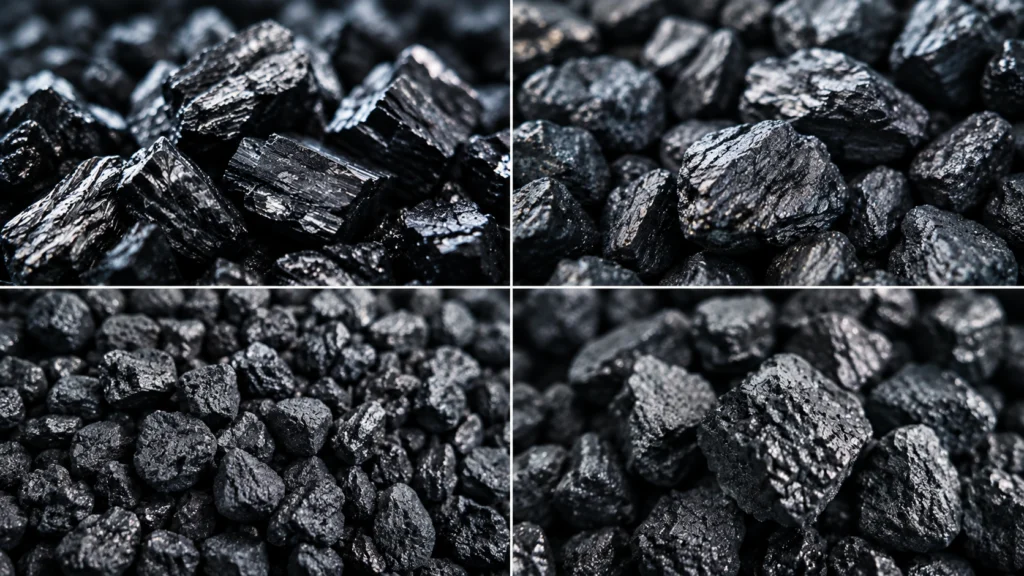
Table of Contents
- The aggregate framework
- The role of the binder
- Where batch variability enters
- What process control can verify
- What buyers should request
The Aggregate Framework
Published reviews describe Soderberg paste as a granular carbon aggregate combined with a carbonaceous binder (review of carbon electrode materials). The aggregate portion may draw on different carbon raw materials according to formulation and application. The relevant quality question is not simply which names appear on a list, but whether the selected materials meet the intended chemical, physical and processing requirements.
Particle-size distribution matters because particles must form a stable packed structure while leaving space for binder distribution. A change in fines, coarse fraction, particle shape or surface condition can change mixing demand and forming response. These relationships should be verified through approved process and inspection records rather than converted into a universal recipe.
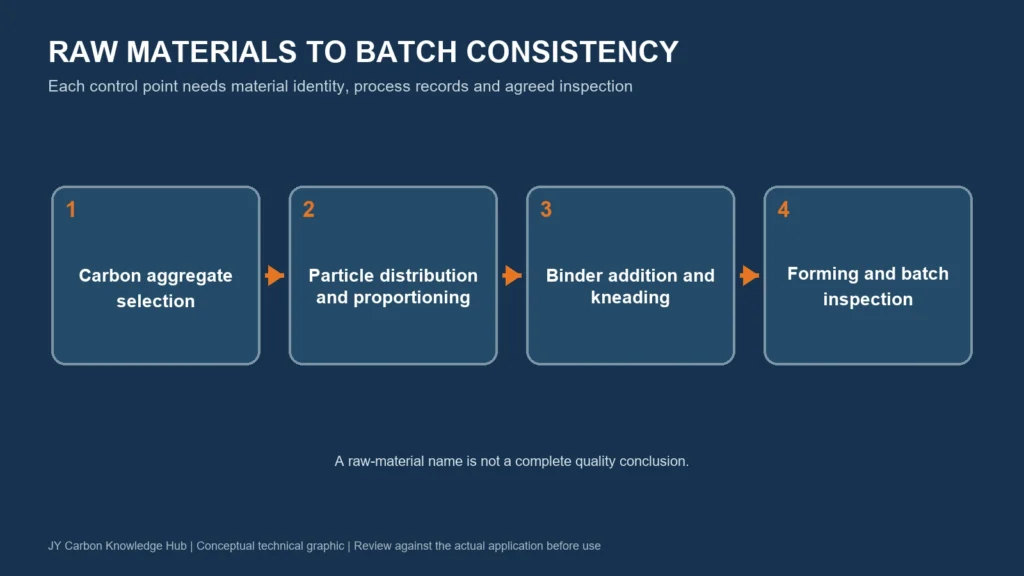
Quality-control chain for electrode paste. Partner-controlled upstream stages must be identified separately.
The Role of the Binder
The binder helps the aggregate mix become a coherent, formable paste. During use, it softens and later carbonizes as the electrode column develops. Its condition and distribution therefore matter during manufacture and during the in-furnace transformation. Binder behavior cannot be evaluated only from its name; the applicable test method and the complete formulation remain important.
Thermomechanical research shows that paste raw materials can respond differently during heating (raw-material characterisation study). The practical conclusion is limited but important: changing a raw material can affect more than one stage, and laboratory observations must be interpreted within their test conditions.
Where Batch Variability Enters
| Control point | Possible source of variation | Evidence to review |
| Incoming carbon materials | Source, lot, chemical or physical condition | Approved supplier, incoming inspection and lot identity |
| Particle preparation | Distribution, fines balance and contamination | Screening or preparation record and sample result |
| Proportioning | Incorrect addition or recording | Batch sheet, weighing record and reconciliation |
| Binder handling | Condition, storage or distribution in the mix | Material identity, handling record and kneading observation |
| Kneading and forming | Non-uniform mixing or inconsistent product form | Process record, visual check and batch sample |
Variation is not automatically proof of an unsuitable product. It is a signal to compare the relevant raw-material lot, process record, sample and test method. The comparison should also include storage and customer handling, because contamination or environmental exposure after shipment can change the condition presented to the furnace.
What Process Control Can Verify
JY Carbon’s direct control focus includes raw-material selection, formulation and ratio control, kneading, forming, inspection logic and batch accountability. These controls support a documented comparison between the agreed specification and the supplied batch. They do not justify a claim that every upstream or downstream carbon process is operated in-house.
When calcination or another relevant upstream treatment is performed by a qualified partner, the control discussion should cover supplier approval, material identity, process or inspection records, sampling and final acceptance. Industrial baking and graphitization should be mentioned only when they are relevant to the product under review; they should not be implied as stages of finished electrode paste manufacture.
What Buyers Should Request
- The approved product designation and application scope.
- Agreed inspection items with named test methods.
- Batch identity and the certificate linked to that batch.
- A clear process-boundary statement for partner-controlled stages.
- A change-notification route for material, method or specification changes.
For product-level discussion, review the JY Carbon electrode paste information. For a broader explanation of why particle sizing, proportioning and kneading matter, use the related Quality & Manufacturing article after it is approved and published.
Sources
- A Review of Biocarbon Substitutes in Electrodes and Refractories for the Metallurgical Industries. Journal of Sustainable Metallurgy, 2024. https://link.springer.com/article/10.1007/s40831-024-00870-x
- The Use of Thermomechanical Analysis to Characterise Söderberg Electrode Paste Raw Materials. Minerals Engineering, 2013. https://www.sciencedirect.com/science/article/pii/S0892687513001210
Written by Sterling Yang,Senior Vice President, Jincheng Jiyang Carbon Co.,Ltd.
Technically reviewed by Mr.Yang,Technical Director.


