Book Categories:
Technical & Engineering Solutions
We don’t just supply carbon. We engineer your smelting efficiency. Partner with our 40-year expert team to reduce consumption, eliminate breakages, and maximize your furnace ROI.
The T.E.S. Service Matrix
A structured, three-phase engineering engagement — from furnace matching to continuous optimization.
Step 01
Furnace Matching & Formulation
We calculate the optimal physical and chemical parameters based on your transformer KVA, casing diameter, and slag/slagless process to ensure perfect compatibility.
KVA
Transformer capacity — primary input for formulation calculation
Step 02
Troubleshooting & Diagnostics
Rapid response to operational anomalies. We diagnose and solve critical issues like electrode paste soft/hard breakages in SAFs, and abnormal oxidation in EAFs.
48h
Written diagnostic report delivered — no site visit required
Step 03
Continuous Cost Optimization
By tracking in-furnace performance data, we iteratively refine the raw material blend and density for your next batch, driving down your power consumption per ton of alloy.
kWh/t
Power consumption per ton — the single KPI we optimize against
Avg. −8 to −12% reduction across 40+ optimization engagements (2020–2025)
Specialized Furnace Support
Dedicated engineering protocols for each furnace type — maximizing electrode performance in your specific process.
Submerged Arc Furnaces (SAF)
SAF-specific paste formulations require precise baking zone control and mechanical stability management.
- Hard & Soft Breakage Prevention
— Formulation density is matched to live furnace load conditions, eliminating paste-side fragmentation under peak KVA cycles.
- Slipping Speed Optimization
— Electrode descent rate is calibrated to your specific transformer KVA and casing diameter, optimising paste consumption and baking zone position.
- Baking Zone Temperature Management
— Thermal gradient monitoring ensures a complete, controlled carbonisation curve — preventing both premature and under-baked zones.
Electric Arc Furnaces (EAF)
Graphite electrode performance in EAF requires control of tip sublimation, side oxidation, and joint integrity.
- Tip Sublimation Reduction
— Arc management and power factor tuning reduce current density at the tip, directly cutting electrode consumption per heat cycle.
- Side Oxidation Control
— Atmosphere exposure management and controlled cooling rates extend lateral electrode service life beyond standard industry benchmarks.
- Nipple Connection Integrity
— Threaded joint testing ensures leak-proof connections, preventing arcing at joints — the leading cause of accelerated side oxidation in EAF operations.
Common Failure Root Causes
Field-validated diagnostics from 40 years of furnace engagements. Select the symptom closest to what you are observing.
Paste Electrode Issues
Hard Breakage (Mechanical fracture under load)
Soft Breakage (Paste slump / semi-liquid drop)
Abnormally High Paste Consumption Rate
Graphite Electrode Issues
Rapid Tip Consumption / Short Service Life
Excessive Side Oxidation (Shoulder loss)
Joint / Nipple Breakage During Operation
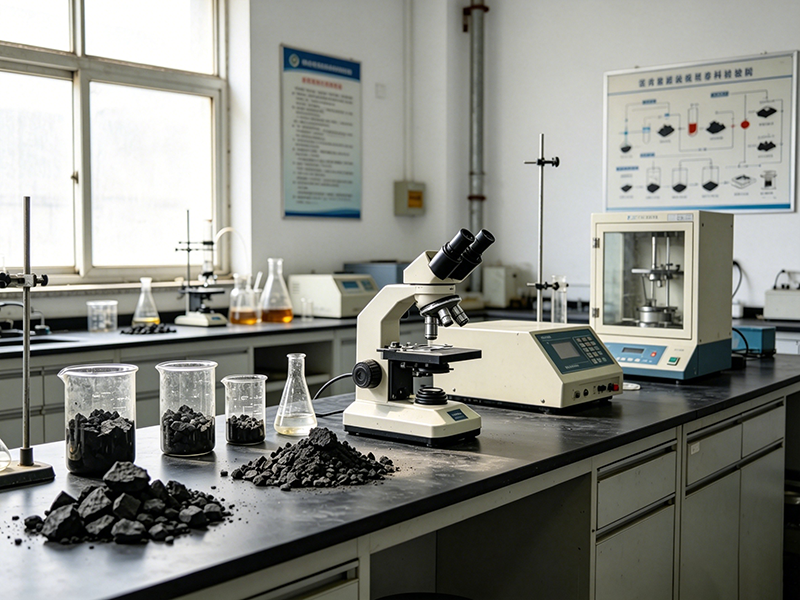
Our R&D Laboratory
ISO 9001 certified. Every batch tested. Full traceability from raw material to your furnace.
ISO
9001:2015 Certified
15
Proprietary Patents
100%
Batch Traceability
Resistivity Testing
Four-probe method. ≤ 60 μΩ·m guaranteed per batch. Full conductivity verification.
Ash Content Analysis
Thermal gravimetric analysis. ≤ 3.0% across all premium grades. Ultra-pure carbon matrix.
Compressive Strength
Universal testing machine. ≥ 18 MPa. Mechanical integrity under extreme furnace load.
Thermal Shock Resistance
Rapid thermal cycling simulation. Validates electrode stability under SAF/EAF operating conditions.
Outcomes From Active Engagements
Anonymous operational results from plants currently under T.E.S. support. Details withheld by client agreement.


Request a Free Technical Audit
Tell us about your current furnace setup or the operational issues you are facing. Our engineers will provide a preliminary diagnostic report.
What to Expect From the Audit
Our T.E.S. team reviews your furnace parameters, current consumption data, and operational pain points to deliver actionable recommendations — before any new material commitment is made.
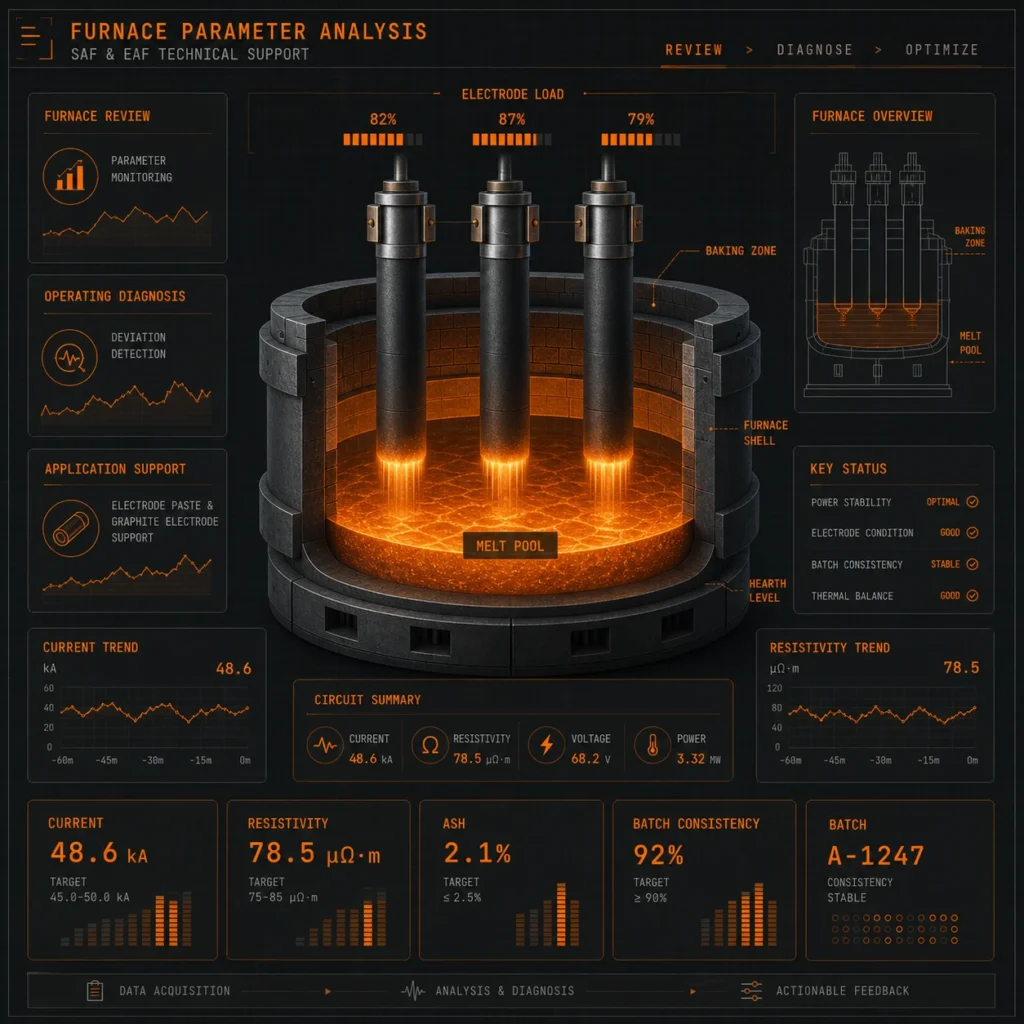
- Furnace Parameter Analysis
— KVA rating, casing diameter, current paste/electrode specifications.
- Consumption Benchmarking
- Root Cause Identification
- Formulation Recommendation
- Preliminary Diagnostic Report
2026 Carbon Solutions Catalog
42 pages of technical specifications, multi-grade comparison tables, application guidelines, and batch testing methods — all in one comprehensive PDF.
- Full electrode paste grade specifications (Ash, Resistivity, Compressive Strength)
- Graphite electrode dimensions: 50–600mm with nipple codes
- SAF & EAF application guidelines
- Material Safety Data Sheets (MSDS)