
A buyer-side specification guide for protecting electrode paste identity and condition through long-distance shipment, storage and furnace-side handling.
Direct Answer
An export electrode paste order should define supplied form, package type, net quantity basis, batch identification, contamination protection, handling marks, transport conditions, storage expectations and receiving inspection. Packaging must fit the customer’s unloading, storage and furnace-side charging route. The correct solution depends on climate, transit, site equipment and paste form; one package design is not universal.
Key Takeaways
- Package design should preserve material identity and condition, not only contain the shipment.
- The supplied paste form must fit unloading, storage and charging equipment.
- Batch marks and package counts should reconcile with shipping and COA records.
- Heat, water, contamination, impact and prolonged storage require route-specific review.
- Receiving inspection should occur before damaged material enters routine stock.
Table of Contents
- Start with the handling route
- Specify the package and identification
- Address transport and storage exposure
- Plan receiving inspection
- What to include in the purchase order
Start With the Handling Route
Map the material route from supplier packing through loading, sea or land transport, customs handling, unloading, warehouse movement and furnace-side addition. Identify where packages are lifted, opened, stacked or transferred. This shows which package strength, dimensions, marks and closure features need technical confirmation.
The paste form must be compatible with the customer’s actual charging system. A form that is convenient for one furnace may create manual handling, bridging or uncontrolled breakage in another route. Confirm the form in the order and avoid substitutions based only on a shared product name.
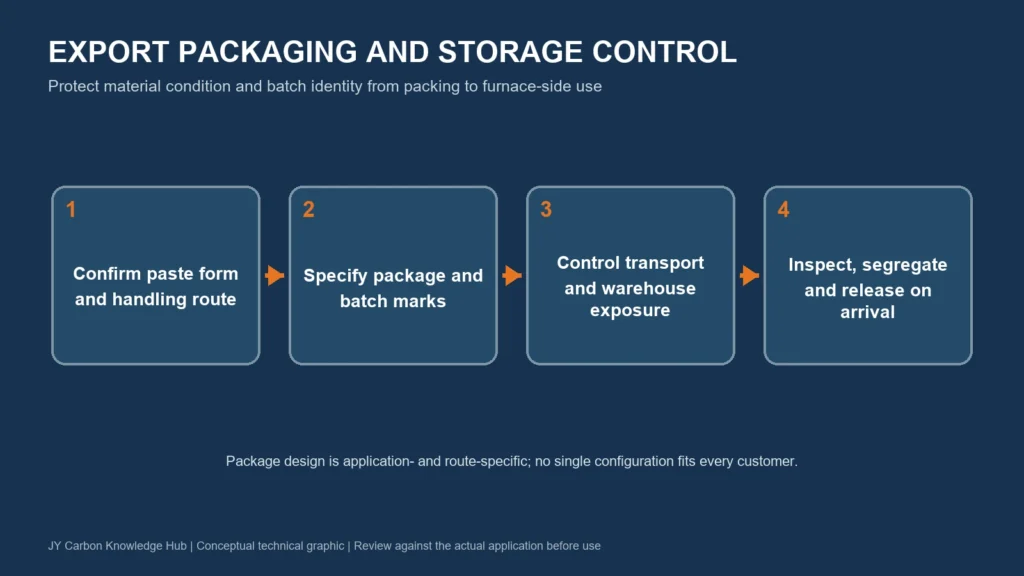
Export handling framework. Package details must be confirmed against the actual logistics and charging route.
Specify the Package and Identification
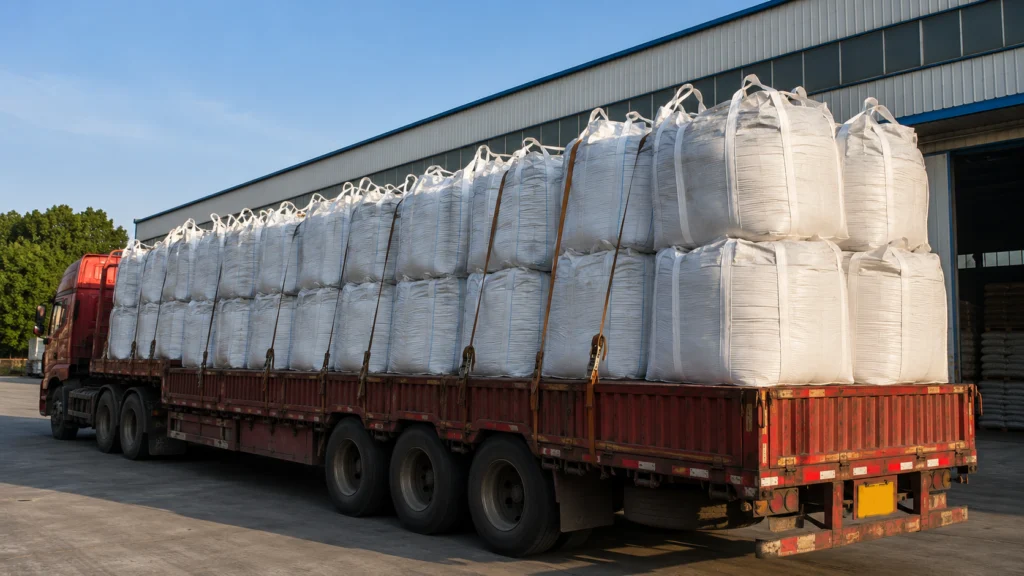
The order should define package type, quantity basis, closure, lifting or handling provisions, pallet or support arrangement where applicable, and the marks required for product and batch identification. Marking should remain legible through the expected route and match the packing list and certificate.
Protection against contamination is part of quality control. Foreign matter from damaged packaging, dirty storage areas or uncontrolled repacking can enter the furnace-side material route. If a package is opened for inspection, the resealing and identification method should be defined.
| Order element | Information to confirm | Receiving evidence |
| Paste form | Approved form and compatibility with the charging route | Visual conformity and handling check |
| Package construction | Container, closure, support and lifting arrangement | Integrity, deformation and closure condition |
| Identification | Product, batch, package and handling marks | Reconciliation with packing list and COA |
| Exposure protection | Route-specific water, heat, dirt and impact controls | Condition on arrival and recorded exceptions |
| Storage | Location, segregation, stock rotation and maximum approved hold process | Warehouse record and periodic condition check |
Address Transport and Storage Exposure
Route risk depends on season, transit duration, container or truck condition, transfer points and the receiving warehouse. Review possible exposure to water, direct heat, dirt, incompatible materials and mechanical damage. Do not publish a universal storage temperature or shelf life unless it is supported by the approved product specification.
Industrial experience has treated packaging and storage contamination as part of electrode paste performance evaluation rather than a separate commercial issue (industrial electrode paste performance review). The practical lesson is to preserve evidence from dispatch through use, not to copy another operation’s packaging specification.
Plan Receiving Inspection
- Compare package and batch marks with shipping documents.
- Record wetting, contamination, deformation, impact or opened packages.
- Verify the supplied form before placing material in routine stock.
- Quarantine questionable packages without mixing them into accepted material.
- Notify the supplier with photographs, package IDs and transport records.
Receiving inspection does not replace laboratory or furnace evaluation. It protects the evidence chain and prevents a visible logistics issue from becoming an unexplained operating event later.
What to Include in the Purchase Order
Include paste form, packaging description, batch marking, document set, route, storage expectation, receiving inspection and nonconformance notification. Use the JY Carbon electrode paste page to confirm the available supply arrangement before finalizing the order.
If the customer has special lifting, warehouse or charging equipment, provide drawings or photographs that can be shared safely. Packaging should be confirmed against those constraints rather than selected after the material has already shipped.
Sources
- Impact of Electrode Paste on Soderberg Electrode Performance. INFACON IX. https://www.pyro.co.za/InfaconIX/510-Wilkinson.pdf
- IMO/ILO/UNECE Code of Practice for Packing of Cargo Transport Units. https://unece.org/transport/documents/standards/ctu-code
Written by Sterling Yang,Senior Vice President, Jincheng Jiyang Carbon Co.,Ltd.
Technically reviewed by Mr.Yang,Technical Director.


